
Clean Eating vs Healthy Eating: 5 Things I Don't Believe Anymore
Aug 10, 2026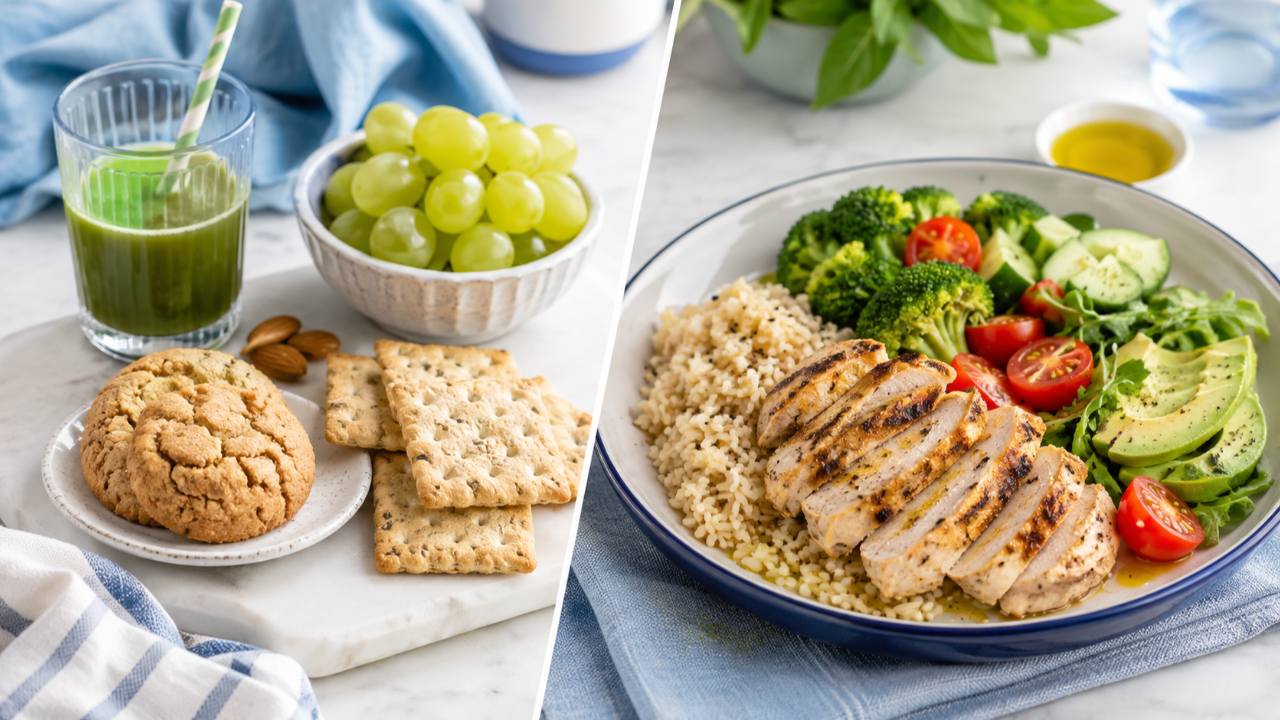
You've been doing this right.
Almond flour instead of white flour. Organic where it counts. You read the ingredient list. You buy the better version of the thing.
And you're still crashing at 3pm.
I want to walk through five things about healthy eating I don't believe anymore. Not opinions I picked because they sound contrarian. These are five places I kept watching the same smart, informed women get stuck, in my own kitchen and in coaching, over and over again. Some of them might annoy you.
1. "Clean eating" and healthy eating are not the same thing
I do believe in better ingredients. Less processed junk, food closer to what it started as. I'm not knocking that.
But a clean cookie is still a cookie.
Almond flour instead of white flour. Coconut sugar instead of cane sugar. Organic everything. At the end of the day it's still a cookie. It isn't dinner. It isn't a meal. And swapping the ingredient list doesn't make it nutritious in the way that actually changes how you feel.
Here's why that distinction matters. Your body doesn't respond to a clean ingredient as a clean ingredient. It responds to what's on the plate together, at the same time.
A plate of organic crackers next to a cold pressed juice is still mostly fast digesting carbohydrates with almost nothing to slow them down. Your blood sugar doesn't check the ingredient list before it spikes.
This is how a lot of women end up eating cleaner and feeling worse. Clean snacks stacked on top of clean snacks is still not a plate. I know, because I lived in that trap for a long time myself.
What actually gets you steady energy, fewer cravings, and no 3pm crash is whether the plate has protein, fiber, and fat sitting next to the carbohydrates, slowing everything down.
Clean is about ingredients. Healthy is about the whole plate, the whole day, and the whole pattern. They're related. They aren't the same word, and a lot of the confusion around food right now comes from treating them like they are.
2. You don't have to quit carbs, you just can't eat them alone
"If you want a snack, have some fruit." Great idea. Fruit is also a carb, and eaten by itself, it's a naked carb.
Here's what happens in your body when a carbohydrate shows up alone. A bowl of rice, a slice of bread, a handful of grapes, nothing else with it.
Your body breaks it down fast and dumps a wave of glucose into your bloodstream. Your pancreas matches it with a wave of insulin to bring it back down. That round trip, the fast rise and the fast drop, is what a crash feels like. The fog twenty minutes later. The hunger that shows up way too soon after you just ate.
Now picture that same rice sitting next to grilled chicken and a pile of vegetables.
The protein and the fiber physically slow how fast your stomach empties and how fast those carbs hit your bloodstream. Same rice. Same calories. But the glucose rises slowly and comes back down gently instead of dropping out from under you. No dramatic spike, no dramatic drop, and no scrambling for something sweet an hour later.
Same food. Completely different experience in your body, because of what was sitting next to it.
This is why so many women decide they can't have carbs, grind through a few weeks of not eating them, and end up right back where they started. You never needed to remove the carbs. You needed to stop eating them by themselves.
3. The scale isn't going to tell you first
You're giving that number a lot more credit than it has earned.
Weight on a scale reflects water, inflammation, hormones, muscle, and fat, all shifting at once, and not one of those moves in a straight line day to day.
Your blood sugar is different. It starts stabilizing almost immediately when you change how you're eating, and it's tied directly to your energy. Which is why energy is usually the first thing to shift, often weeks before the scale catches up, if it moves at all in a given stretch.
So before that number does anything at all:
- The 3pm crash gets less brutal.
- You stop reaching for something at four just to make it to dinner.
- You sleep better, because steadier blood sugar overnight means fewer 2am wakeups.
- Your mood evens out, because a lot of what feels like an emotional swing is a blood sugar swing.
If the scale is the only thing you're measuring, you will walk right past every one of those and conclude that nothing is working.
This post came out of an episode of Real Food. Real Energy. Real Life. Listen to the full episode here if you'd rather hear me talk through it.
4. The 4pm pantry moment is blood sugar, not self-control
You know the one. Standing in the pantry at four or five o'clock with your hand already inside a bag, thinking, how did I even get here.
Here's the mechanism, because seeing it laid out changes how you think about that moment.
When your blood sugar spikes hard, from a carb eaten alone, from skipping lunch and overeating later, from coffee on an empty stomach, your body responds hard to bring it back down. Sometimes that response overshoots, and your blood sugar lands lower than where it started.
Your brain treats that drop as an emergency. Glucose is its primary fuel, so it demands the fastest possible fix. That isn't a preference. It's an urgent signal, the same category as thirst.
So you want the pretzels. Of course you want the pretzels. Anything fast will work, and your brain knows it.
The craving isn't the problem. The craving is the alarm. Something happened at breakfast, or at lunch, or three hours earlier that set it off.
Almost every conversation about this stays stuck on calories or self-control and skips the mechanism entirely, which is why the advice never seems to help.
5. The diet was never the problem
People spend months learning keto or macros or whatever this year's version is. I've done the macros. And almost none of that time goes toward the one skill that decides whether any of it holds up:
What do you do when you have zero mental capacity left to think about dinner?
Every plan you've ever downloaded was built assuming you'd have decision making left at the end of the day.
Researchers call it decision fatigue. Your brain has a limited daily capacity for decisions and it drains like a battery. What to wear. Which email to answer. Whether to fight the shower battle again. By 5:30 that battery is close to empty, and a plan that requires you to decide whether you're actually doing the thing you planned is asking for capacity you no longer have.
That's the real gap, and it isn't information. Most women I talk to already know more about nutrition than they give themselves credit for. What they don't have is a plan built for the version of them who is wiped out at 5:30, making the four hundredth decision of the day, with no interest in remembering which diet she's supposedly following right now.
That's why people quit. Not because they didn't know enough. Because nobody built anything for that version of them. Every plan gets built for the version of you with energy left over, and she's almost never the one standing in the kitchen at 5:30.
The thread running through all five
Almost everything that gets called a healthy eating problem is a blood sugar problem.
The cravings. The energy. The crashes. The guilt spiral after one hard day. The reason the same plan that worked in January falls apart by March. It all traces back to the same handful of mechanisms.
Knowing that helps. It also doesn't tell you what to put on your plate tonight when you're standing in front of the fridge with nothing left in you and dinner still has to happen. That's a different problem, and it's the one I built something for.
What to make when you have no idea what to make
That's the actual name of it, because that's the actual moment. It's free, and it walks you through what to do when you're out of capacity and the chicken is still frozen.
A few other things worth reading if this landed:
- Why Your Summer Eating Keeps Falling Apart (And What to Do Instead)
- The 3 Biggest Obstacles to Healthy Eating (and How to Overcome Them)
And if you want the whole EASY Plate framework plus a group of women working on the same thing, that's what The Collective is for.


