What's for Dinner? Why Meal Planning Keeps Falling Apart
My worst dinner disaster isn't burning dinner. It's never making one.
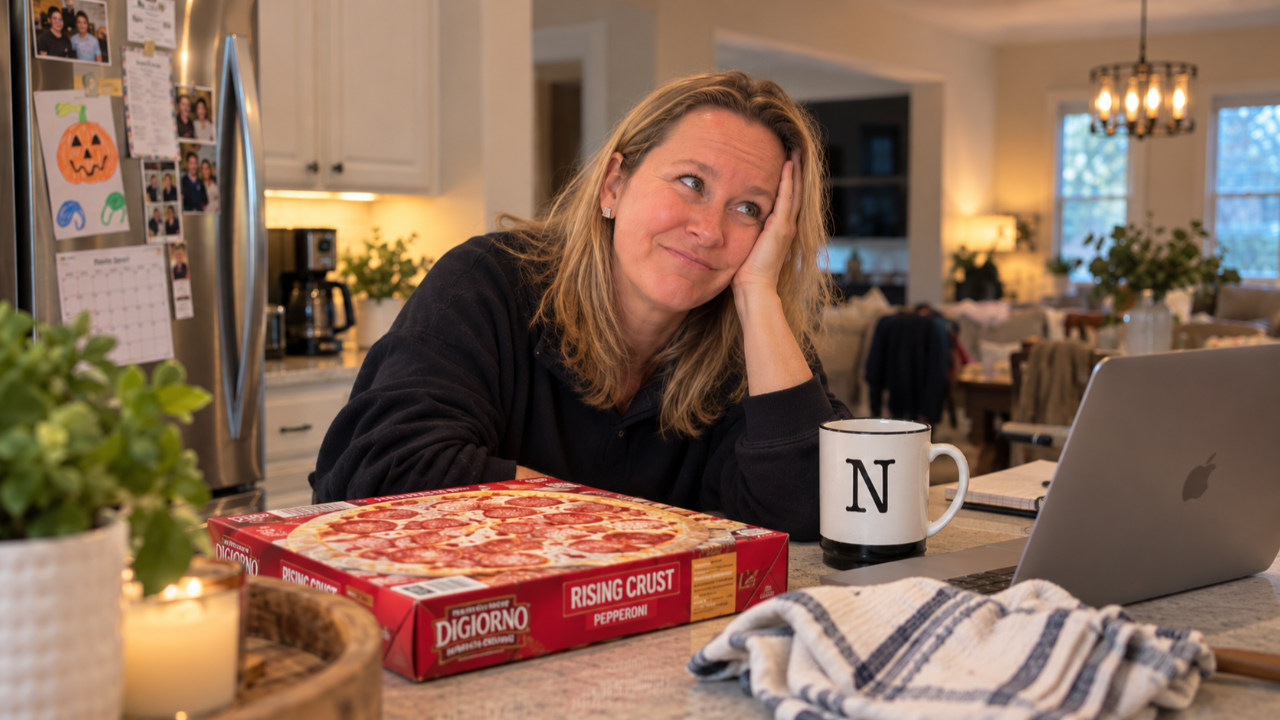
You know how it goes. It gets to be that time of night, nothing's figured out, and the frozen pizza comes out again. Everybody eats. Nobody is harmed. The kids are fine.
But there's always a tiny voice acting like that pizza is evidence you failed. Again.
I'm a certified health and nutrition coach, and I still have frozen pizza nights. So I can tell you that knowing what to eat was never my problem. If you're a busy mom who dreads "what's for dinner?" and your meal planning keeps falling apart, I don't think you need more recipes either. The pizza isn't the problem. The daily pile of decisions is.
This post comes from my podcast episode on the same topic. Listen to the full episode here.
And if you want the meal planning system I built for my family, you can get it here.
Why does "what's for dinner?" wear you out?
It wears you out because breakfast, lunch, snacks, and dinner all get decided from scratch every day, and those decisions pile up in your head.
That's what it looks like at my house. I wake up knowing every meal is waiting to be invented again.
- Breakfast: What do we have? Is anybody out of something? Who's eating what? Is somebody already late for school?
- Lunch: Lunches for the kids, lunch for me (usually whatever we have), and lunch for my husband.
- Dinner: The big one. Somebody walks in, sometimes before they've even left for school, and asks, "What's for dinner?"
That's a whole day of decisions, and they don't go anywhere. They sit in your head and run in the background while you work, drive, answer texts, and keep track of everything else.
So by the time dinner comes around, it's not that you can't cook. It's that you're out of decisions.
That's usually when the pizza comes out.
Why does dinner get harder during the holidays?
The holidays add a decision to almost every day: parties, school programs, potlucks, and travel all change who eats what, when, and where.
Halloween is right around the corner. Then Thanksgiving, holiday parties, cookie exchanges, school programs, and work events. Every weekend starts to have something on it.
And each of those comes with its own questions. Who's bringing what? What time do we eat? Do we grab something on the way? Is there anything in the house the kids can eat while we're gone?
If dinner already feels like a lot in October, it gets heavier from here.
Why don't new recipes help you eat healthier?
New recipes add decisions. Every recipe means new ingredients to buy, new steps to learn, and new food to talk your family into eating.
I've been guilty of this one myself. We decide the pizza is the issue and that we're going to do better. So we find new recipes, clean out the freezer, and write a big grocery list full of things we think we should be eating.
All of that adds more choices to a week that was already full:
- New recipes to pick from
- New ingredients to find
- New things to figure out how to make
- A family to convince to eat it
By the end of the week, you're having the frozen pizza anyway. Now there's also a bag of something in the fridge going bad.
Why don't generic meal plans work for real families?
A meal plan someone else wrote doesn't know your house: your schedule, your picky eaters, or the foods your family won't or can't eat.
I've tried that route too. I've had plenty of great meal plans. They looked wonderful and helpful.
But a printed plan doesn't know:
- You've got boys who eat a lot
- Which nights are practice nights, and that some nights nobody's home until seven
- The foods your family doesn't eat, can't eat, or is allergic to
So you print it out, look at it, and end up sitting there on Sunday starting all over again. Which means more decisions.
Why does frozen pizza feel like failure?
Frozen pizza feels like failure when it's a last-minute fallback. When pizza night is already on the plan, the same meal feels completely fine.
It's the exact same frozen pizza. When it's 6:45 and I'm pulling it out of the freezer because I've run out of ideas, the little voice shows up. That's when it feels like evidence.
When Friday is already pizza night, it's a different story.
The food didn't change. What changed was whether the decision had already been made.
I think a lot of the guilt we carry around food has very little to do with food. It's the feeling of dropping the ball. Breakfast, lunch, and dinner all get graded, every day, and that pizza (or spaghetti, or whatever your go-to last-minute meal is) gets the bad grade.
A decision that's already made doesn't get graded. It's just what we're having tonight.
Why does Sunday meal planning keep falling apart?
Sunday planning starts from a blank page, so you make the whole week of food decisions in one sitting, which is the exact thing that wears you out.
The obvious answer is to sit down on Sunday and plan the week. I did that for years. It's never just the plan, though. It's also:
- What do we feel like eating this week?
- What's going on? Multiple practices? An activity right after school? When am I even going to cook?
- What will the kids actually eat?
My husband and I divide and conquer on practice nights, and I still have to line all of that up against the meals before I can plan anything. By Sunday I'm dreading it, because I have to start over again.
I do still set certain nights for certain meals. But my kids get sick of tacos and burrito bowls every week. Sometimes I do too.
How do you take dinner decisions off your plate?
Give the decisions somewhere to live outside your head: a plan built around your family that carries over, so Sunday isn't a blank page.
For a long time, I winged dinner because meal planning stressed me out. That meant extra grocery trips, frustration, probably spending more than I needed to, grabbing things that weren't great for us, and everybody eating something different.
So I built One Less Thing, my personalized meal planning system. Personalized is the point. It's built for your family, not someone else's.
How it works:
- You tell it about your house. Your people, your busy nights, and the foods each family member does and doesn't eat.
- It gets into the details. If your family eats chicken but not chicken thighs, it skips meals built around chicken thighs.
- It uses the food you like. Pick the cuisines your family loves, like Thai or Italian, and pull in recipes from your favorite food bloggers.
- You say "plan my week." It plans the whole week. Want to swap something? Tell it, and it changes it.
- You get your grocery list. Once you approve the week, you get the full list.
- It fits your prep time. If you have time to prep, it tells you what to prep and when, even if you only have a 15-minute block.
- It estimates cost. You get a rough idea of what meals cost if you're watching the budget.
Setup is a guided intake form. You paste the instructions into Claude, ChatGPT, or Gemini, and it runs the whole thing. The next week, you go back in, say "plan my week," and the week is planned.
The short version
- Dinner wears you out because of the decisions, not the food.
- New recipes and generic meal plans usually add decisions instead of removing them.
- The same meal can feel like failure or like a plan. The difference is whether the decision was already made.
- What helps is giving those decisions somewhere to live outside your head.
So what's the decision you're most tired of making? I'd bet it's not the food. It's having to come up with it again.
And if there's a frozen pizza in your oven tonight? Everybody eats. Nobody is harmed.
Listen to the full episode of 1% Better in Midlife:
Grab One Less Thing Now